Software Project Planning: Scope, Feasibility, and Scheduling Foundations
Written by Rohan Nandan on April 24, 2026 · 12 min read
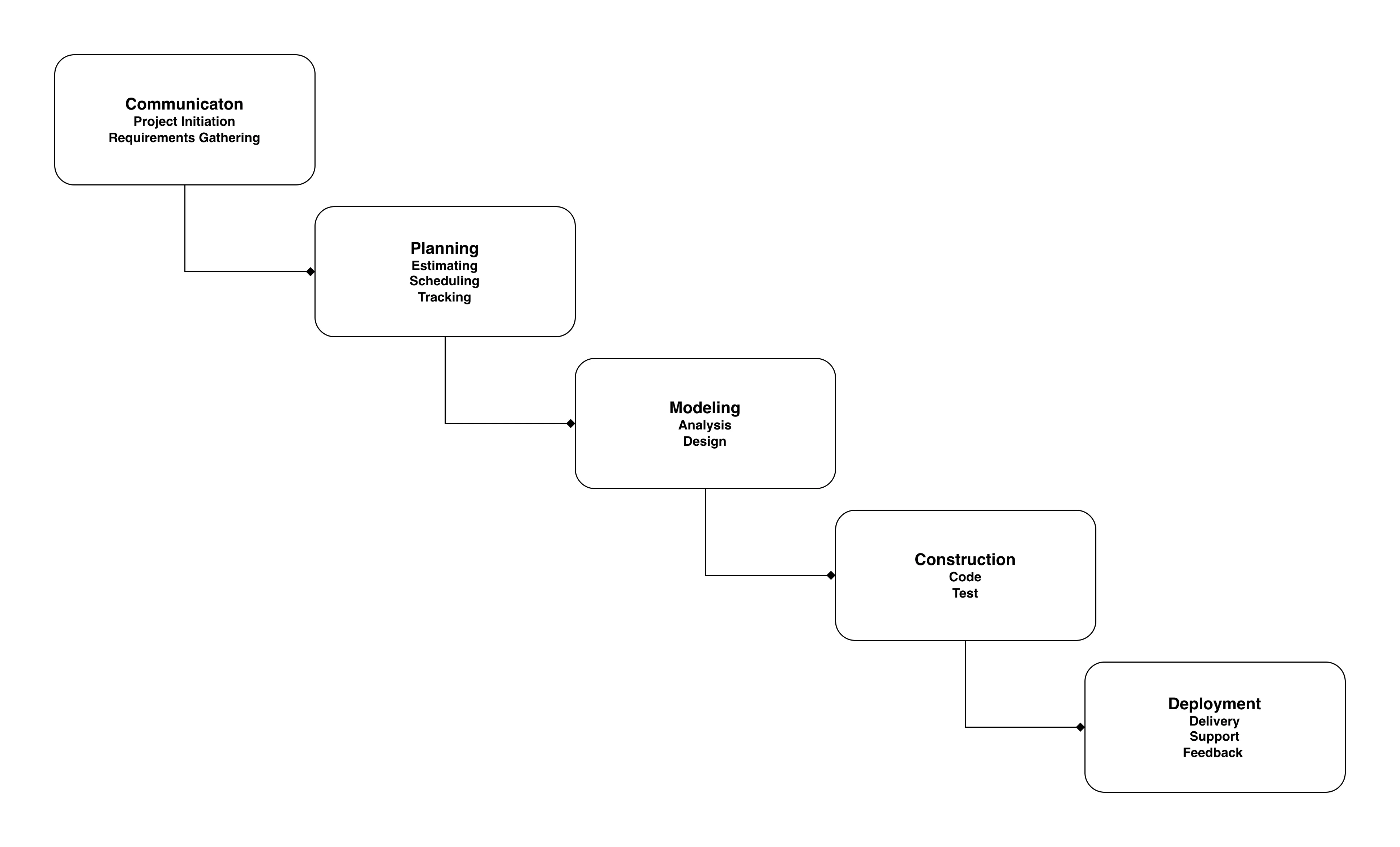
Strong software delivery begins with strong planning. Before coding starts, the team must estimate effort, identify resources, validate feasibility, and establish a schedule that can be tracked and adjusted. Without this foundation, risk compounds quickly. A team that skips planning does not avoid the work it represents — it simply pushes that work later in the project, where mistakes are far more expensive to correct.
Key Planning Questions
A planning phase should answer practical questions such as:
- How many activities are part of software planning?
- How can software metrics guide project and process control?
- How can effort, cost, and duration be estimated reliably?
- What techniques can identify and evaluate project risks early?
These questions matter because they force a team to make its assumptions explicit before money and time are committed. Software metrics give planning a factual basis rather than a hopeful one: past project data on effort, defect rates, or productivity can be used to sanity-check new estimates and to monitor whether the current project is drifting off track once work begins. Effort, cost, and duration estimates need reliability because they become the commitments a team is later measured against — an optimistic guess dressed up as a plan will eventually surface as a missed deadline or a budget overrun. Risk identification, meanwhile, is what allows a team to plan around problems instead of discovering them mid-project, when options for addressing them are far more limited.
Five Major Planning Activities
Five core planning activities are commonly defined:
- Estimation
- Scheduling
- Risk analysis
- Quality management planning
- Change management planning
These activities work together. If one is weak (for example, poor estimation), the schedule and risk profile become unstable.
This five-activity breakdown is a standard framing in software engineering coursework, most notably from Roger Pressman’s Software Engineering: A Practitioner’s Approach, which groups project planning into exactly these five activities as the core of the planning phase [1]. Estimation sets the baseline everything else depends on — it answers how much work exists and how long it will realistically take. Scheduling translates that estimate into a sequence of tasks with dependencies, owners, and dates, so progress can actually be tracked against a plan rather than judged by feel. Risk analysis looks ahead at what could derail the schedule or the estimate — a key personnel departure, an unproven technology, an unclear requirement — and decides in advance how the team will respond if that happens. Quality management planning defines what “done” means for the product, including the standards, reviews, and testing activities that will be used to verify it, so quality is designed in rather than inspected in at the end. Change management planning accepts that requirements will shift and sets up a controlled process for evaluating and absorbing that shift, rather than letting every change request silently expand the project’s scope — in practice, this means every request is logged, assessed by the relevant project stakeholders, and explicitly accepted, deferred, or rejected, rather than being absorbed informally into the work [2].
Because these five activities feed each other, weakness in one activity does not stay contained. A poor estimate produces an unrealistic schedule; an unrealistic schedule leaves no slack to absorb risks that materialize; and no slack means every late-arriving change request becomes a crisis instead of a manageable adjustment.
Project Planning Task Set
A practical planning workflow can be organized as follows:
- Establish project scope
- Determine feasibility
- Analyze risks
- Define required resources
- Estimate cost and effort
- Develop an initial project schedule
- Repeat planning for each prototype/increment as scope evolves
This sequence is deliberately ordered: each step depends on information produced by the one before it, and it mirrors the task-set structure used in Pressman’s own treatment of project planning, which places scope and feasibility before resourcing and estimation, and treats scheduling as the activity that closes out the initial planning pass [3]. Scope has to be agreed before feasibility can be meaningfully assessed, since feasibility is really asking “can we deliver this particular scope?” Risk analysis follows feasibility because once a team understands what is technically and financially achievable, it can identify the specific ways delivery might still go wrong. Resource definition and estimation both draw on the risk-adjusted view of the work, and the schedule is the first artifact that turns all of the prior analysis into dates a stakeholder can actually hold the team to. The final step — repeating the cycle for each prototype or increment — reflects the reality that scope is rarely fully known upfront; as the team learns more, earlier planning decisions need to be revisited rather than treated as fixed.
Resource Planning Detail
Resource definition should include:
- required human resources,
- reusable software resources,
- environmental resources (tools/platform/infrastructure).
Human resources means identifying not just headcount but the specific skills and roles a project needs — for example, whether the team requires a database specialist, a UI designer, or someone experienced with a particular framework, and when in the timeline each role is actually needed. Reusable software resources cover existing components, libraries, or internal frameworks that can be incorporated instead of built from scratch; identifying these early can significantly reduce both estimated effort and risk, since reused code is typically better tested than new code. Environmental resources are the tools, platforms, and infrastructure the team depends on to do the work at all — development environments, testing hardware, CI/CD pipelines, licenses, and cloud infrastructure. Overlooking environmental resources is a common planning failure, since a team can be fully staffed and still blocked waiting on infrastructure that was never provisioned.
Estimation Detail
Cost and effort estimation should:
- decompose the problem,
- generate two or more independent estimates,
- reconcile estimate differences.
Decomposing the problem means breaking a large, hard-to-estimate piece of work into smaller components that are each easier to reason about individually — it is far more reliable to estimate ten well-defined subtasks and sum them than to guess at the effort for one large, vaguely bounded feature. Generating two or more independent estimates guards against the blind spots of any single estimator: standard estimation guidance recommends developing estimates using more than one basis — for instance size, function points, or use-case counts — precisely so that different techniques’ biases can be checked against each other [4]. Reconciling differences is the step that turns multiple estimates into one usable number — rather than simply averaging, the team should understand why the estimates diverged, since that discussion often reveals a risk or an unclear requirement that needed to be planned for regardless of which estimate turns out to be closer.
Scheduling Detail
Initial schedule development should:
- define a meaningful task set,
- build a task network,
- use scheduling tools to produce timeline charts,
- define schedule tracking mechanisms.
A meaningful task set breaks the project into units of work that are small enough to track individually but large enough that managing them doesn’t become overhead in itself — tasks should each have a clear completion criterion. Building a task network means mapping the dependencies between those tasks: which tasks must finish before others can start, and which can run in parallel. This dependency structure is what determines the project’s critical path — the sequence of dependent tasks that sets the minimum possible project duration; tools such as PERT charts are a more sophisticated form of this same activity network, used specifically to visualize dependencies and timing across a project [5]. Scheduling tools, including Gantt charts, turn that task network into a visual timeline that stakeholders can read at a glance, showing not just dates but also where slack exists and where the schedule is tight. Finally, schedule tracking mechanisms — status meetings, milestone check-ins, or automated progress reporting — are what make the schedule a living document rather than a one-time forecast; without them, a team has no reliable way of knowing it is falling behind until the deadline has already been missed.
What Scope Means in Planning
Software scope describes:
- functions and features to deliver,
- data input and output,
- content presented to users,
- performance, constraints, interfaces, and reliability boundaries.
Scope can be defined using:
- a narrative description developed with stakeholders, or
- use-case sets created with end users.
In project terms, scope is the system’s goals, limitations, and constraints.
Functions and features describe what the system will actually do for its users — the capabilities that justify building it in the first place. Data input and output define what information flows into the system and what the system produces in return, which shapes everything from database design to integration points with other systems. Content presented to users covers the information and interface elements the system exposes, distinct from the underlying functions that generate that content. Performance, constraints, interfaces, and reliability boundaries set the non-functional expectations — how fast the system must respond, what external systems it must connect to, and how much downtime or error rate is acceptable — which are often just as important to agree on upfront as the functional feature list, since they are far harder to retrofit later.
The two common approaches to capturing scope — narrative description and use-case sets — suit different situations. A narrative description, developed collaboratively with stakeholders, works well when the system’s purpose can be captured in prose that stakeholders can read and validate directly. Use-case sets, built with end users, are better suited to systems with many distinct user interactions, since they force the team to enumerate specific scenarios rather than relying on a general description that might quietly omit an important use case. Either way, the goal is the same: scope should leave as little room as possible for two people to reasonably disagree about what is, and is not, included in the project.
Feasibility as a Go/No-Go Gate
After scope agreement, the team should explicitly test feasibility:
- Can the system be built with available technology?
- Can it be delivered within available budget and time?
- Can the effort be staffed and supported at the required level?
- Is there a real business need for this system?
A technically possible product with no practical demand is still a failed investment.
Each of these questions targets a different way a project can fail before it even starts. Technical feasibility asks whether the required technology genuinely exists and is mature enough to rely on — an exciting but unproven technology can turn a straightforward feature into an open-ended research problem. Budget and time feasibility asks whether the estimated cost and schedule fit within what stakeholders are actually willing to commit; a plan that is technically sound but unaffordable is not a viable plan. Staffing feasibility asks whether people with the right skills can actually be found, hired, or trained in time to do the work, since a plan that assumes an idealized team it cannot recruit will not survive contact with reality. Business feasibility is the check that is easiest to skip and most costly to skip: even a system that is affordable, staffable, and technically achievable is not worth building if it does not solve a real problem for real users. Running all four checks together, rather than assuming a “yes” on any one of them, is what makes feasibility a genuine go/no-go gate rather than a formality.
Why Planning Must Be Iterative
Planning is not a one-time document exercise. As prototypes and increments are defined, steps for scope, estimation, risk, and scheduling should be repeated with new information.
This iterative view improves:
- estimate realism,
- schedule control,
- risk visibility,
- and stakeholder alignment.
Estimate realism improves because each increment delivered gives the team real data about how its estimates compare to actual effort, which can be fed directly into the next round of estimation rather than relying solely on upfront guesswork. Schedule control improves because a schedule revisited after each increment reflects what has actually happened, not just what was originally hoped for, making the remaining timeline far more trustworthy. Risk visibility improves because risks that were theoretical at the start of the project often become concrete — or are resolved entirely — once real work begins, and an iterative planning cycle gives the team a natural checkpoint to re-evaluate its risk register. Stakeholder alignment improves because stakeholders see working increments and revised plans regularly, rather than a single plan produced months earlier that may no longer reflect what the project has become; this steady contact reduces the chance of a late, unpleasant surprise about what is actually being delivered.
Conclusion
Software project planning is a control system for uncertainty. Teams that define scope precisely, challenge feasibility early, and build evidence-based estimates and schedules are more likely to deliver predictable outcomes. Planning rigor does not slow delivery. It prevents avoidable failure.
None of the five planning activities, nor the task set that organizes them, functions well in isolation — scope grounds feasibility, feasibility justifies the estimate, the estimate drives the schedule, and risk and change management keep all of it honest as the project evolves. Treating planning as a single upfront exercise rather than a discipline the team returns to at every increment is one of the most common ways this structure breaks down in practice. The teams that keep revisiting these fundamentals, rather than treating the initial plan as fixed, are the ones whose schedules and budgets still make sense by the time the project ships.
References
- StudyLib — Chapter 23: Estimation for Software Projects (Pressman, R., Software Engineering: A Practitioner’s Approach, McGraw-Hill)
- USPTO Patent Full-Text — Method and system for a quality software management process
- SlideShare — Estimation for Software Projects, Chapter 26 (Pressman slide deck)
- Scribd — Pressman: Software Project Scheduling
- SSN College of Engineering — Unit-5 Software Project Plan & Planning Process (Chamundeswari Arumugam, based on Pressman, 7th ed., McGraw Hill, 2010)