Bula High School: Building a Full-Stack Student Administration System
Written by Rohan Nandan on September 15, 2026 · 5 min read
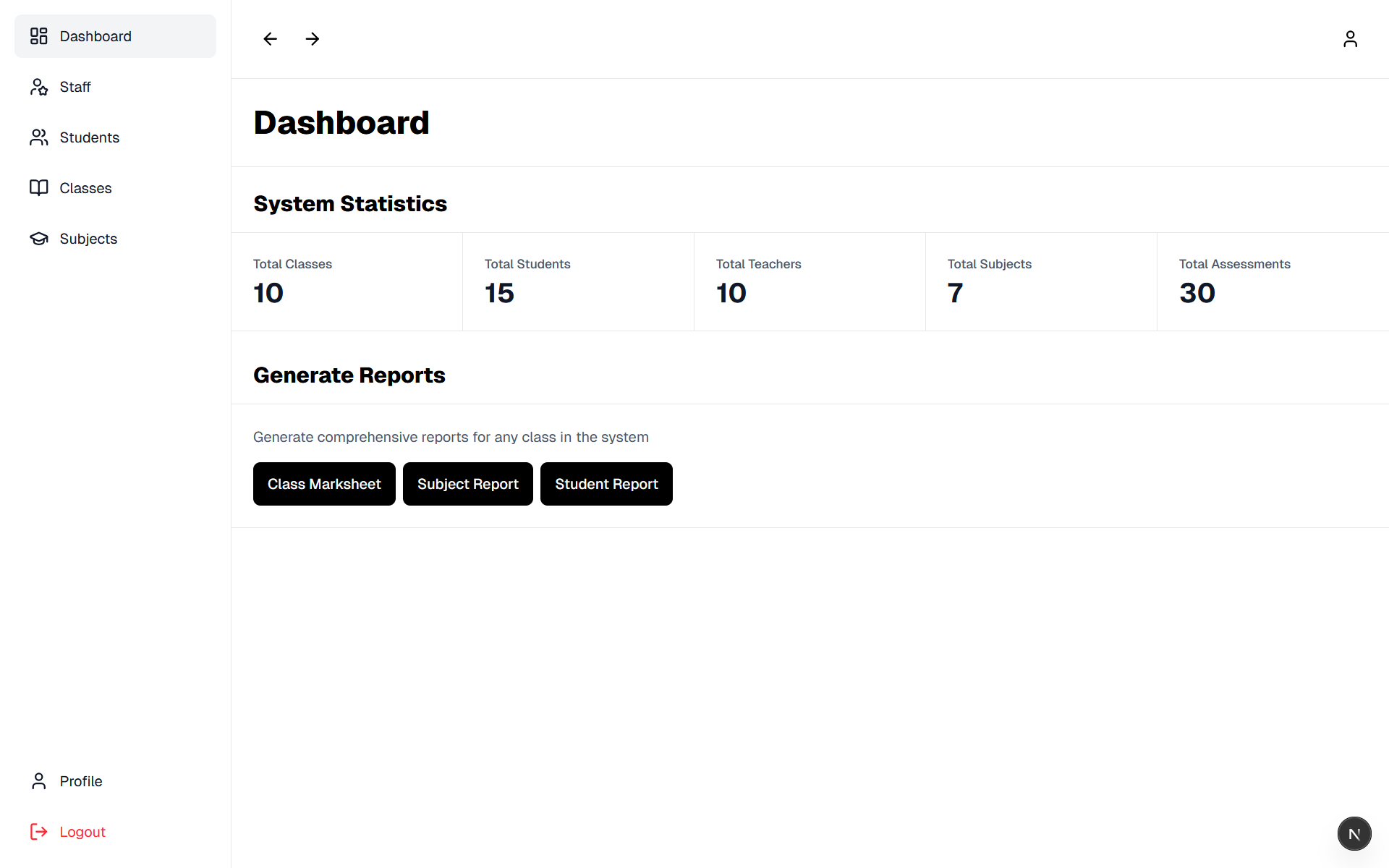
Problem
Small schools running admin on spreadsheets hit the same wall every term: no single source of truth for who is enrolled in which class, no enforcement of grading rules, and report generation that means someone manually copying numbers into a document.
This was the CS241 Software Design and Implementation group project — five of us building a Student Administration System for a fictional school (“Bula High School”) — with the brief of covering the full academic-admin loop: staff, students, classes, subjects, enrollments, assessments, marks, and reporting, gated behind proper role-based access. We received an A+.
Approach
The system has three roles — Admin, Teacher, Student — enforced both at the API layer (Spring Security route matchers plus method-level @PreAuthorize) and in the frontend (an AuthGuard component wrapping pages with an allowedRoles prop). Admins manage staff and students, teachers manage their own class’s assessments and marks, and students see only their own enrollment and marks.
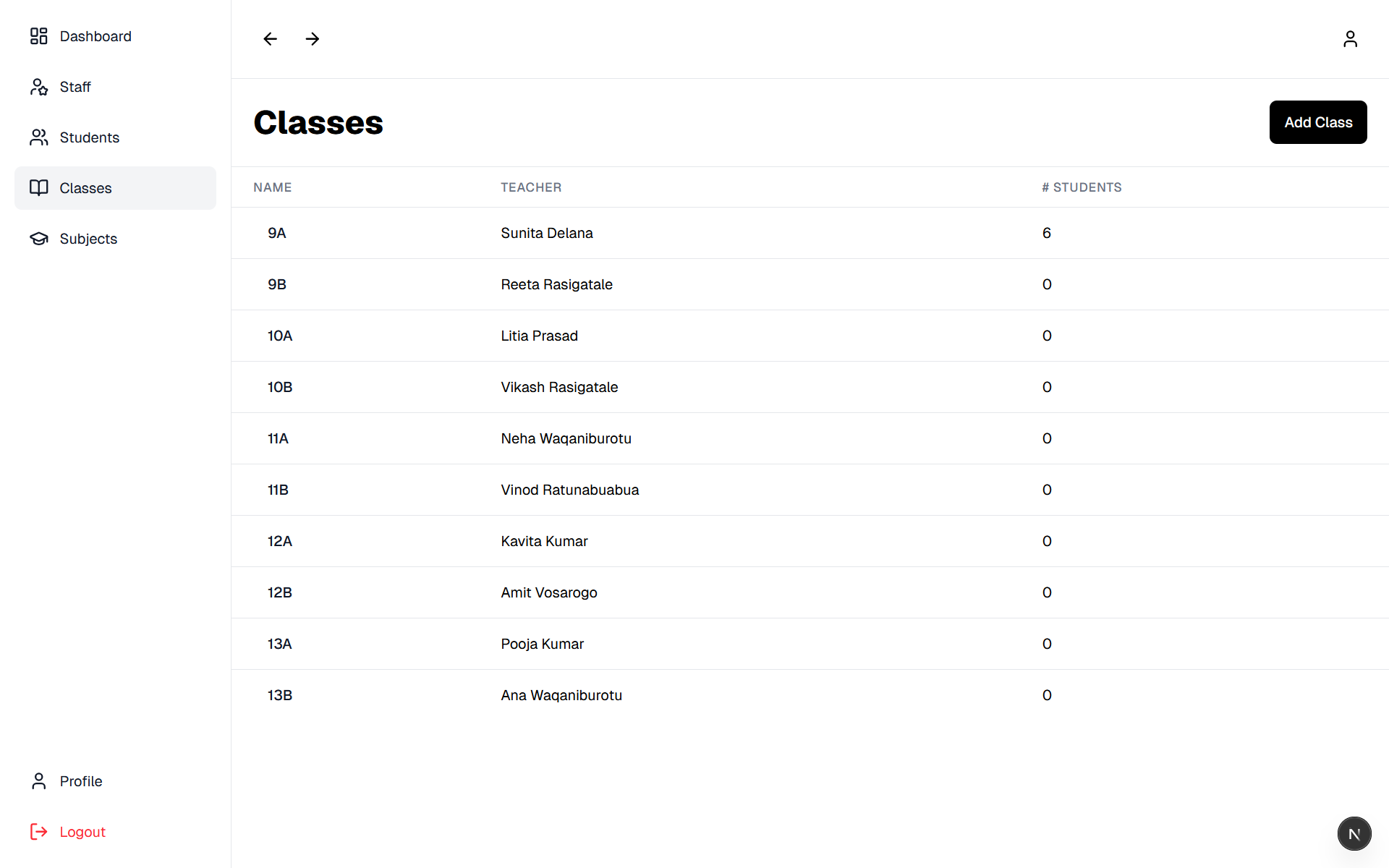
1. The class and assessment side
My part was the class and assessment side of the system, full-stack:
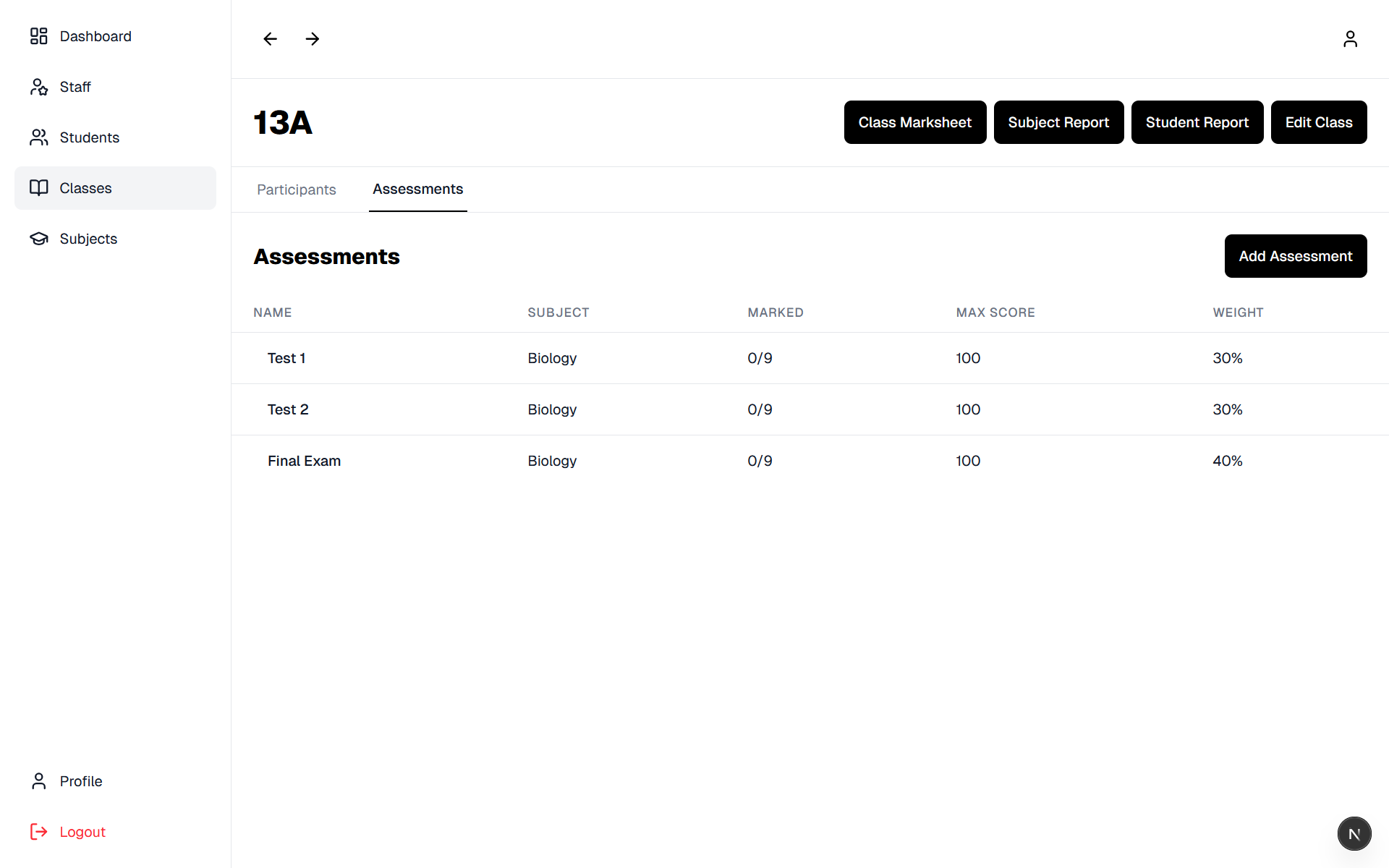
- Class and assessment management end-to-end — creation, editing, and cascading deletion.
- Mark entry and the assessment-weighting rules: a class-subject’s assessments cannot add up to more than 100% weight, validated server-side on both create and update.
- Subject report generation, exported as PDF client-side.
- The RBAC-aware dashboard and the enrolled-student class view.
- A UI pass — swapping icon libraries, adding toast notifications, and tightening loading states.
Some of the business rules baked into the backend are the kind that are easy to get wrong:
- A class must have exactly 5 unique subjects.
- A teacher can only be assigned to one class at a time.
- Grading uses Fiji’s secondary-school letter scale rather than a generic A–F curve —
getLetterGrade()caps at A+ from 85% and floors at E below 40%, with letter colours to match in the UI.
2. Authentication and reporting
Auth is JWT-based, issued by Spring Security on login and carrying the user’s role and school ID as claims, checked on every request by a JwtAuthenticationFilter ahead of Spring’s own auth chain. Password reset runs on a token table with expiry and single-use enforcement, emailed out via Spring Mail.
Report generation runs entirely in the browser: pdfExport.ts builds class marksheets and per-subject reports with jsPDF and jspdf-autotable, computing the weighted subject grade and overall grade client-side.
Stack
- Frontend: Next.js 15, React, TypeScript, Tailwind CSS.
- Backend: Spring Boot, Java 17, Spring Security, JWT (jjwt).
- Database: PostgreSQL via JPA/Hibernate —
User(single table for Student/Teacher/Admin),ClassEntity(many-to-many withSubjectandUserfor enrollment),ClassSubjectas the join entity thatAssessmenthangs off, andMarktying a student, an assessment, and a score together. - PDF export: jsPDF + jspdf-autotable, generated client-side.
- Email: Spring Mail for password-reset links.
Seven controllers (/api/assessments, /api/auth, /api/classes, /api/class-subjects, /api/marks, /api/subjects, /api/users) covering roughly 30 REST endpoints in total.
Results
- A+ in CS241 (Software Design and Implementation).
- 94 commits from 5 contributors over about five and a half weeks (Sept 7 – Oct 16, 2025).
- 16 of those commits are mine, concentrated on class management, assessment creation/editing, mark entry, and report generation — touching both the Java service/controller layer and the corresponding Next.js pages.
- A working PDF export pipeline for class marksheets and per-subject reports, generated entirely in the browser.
- Full RBAC enforcement across three roles, checked at both the network and UI layer.
Lessons
- The duplicate marks table was invisible until delete-time. The schema holds both a
Markentity and a leftoverAssessmentMarkthat do almost the same job. You can see the scar tissue directly in the deletion code:AssessmentService.deleteAssessment()deletes from both tables “just in case” — a defensive move that is really a tell that the schema drifted mid-project without a follow-up migration to consolidate it. - Auth-adjacent flows need a done-check.
EmailService.sendPasswordResetEmail()takes atoEmailparameter and then ignores it — the message is hardcoded to one contributor’s personal Gmail. The kind of placeholder that slips through easily in a group project. A short checklist (every parameter actually used? hardcoded recipients or secrets? token expiry and single-use verified?) would have caught it at merge time instead of in my retro. - Never leave credentials in source. The JWT signing key is a hardcoded string in
JwtUtil, and the mail account’s app password sits in plaintext in the committedapplication.properties. Env vars and secrets managers from day one — especially on a public repo where every contributor has the clone. - Shared controllers are a merge bottleneck. Five people committing into overlapping files like
ClassControllerandAssessmentServicegenerates constant conflict cost. Clear ownership boundaries, smaller commits, and a rebase cadence made the second half of the project noticeably smoother. - “Exactly 5 unique subjects” was a strict-enough rule, then it bit. It fitted the fictional school perfectly and made the enrollment screen simple — but it is policy, not physics, and real schools vary by term. Where a business rule encodes convention rather than constraint, keep it out of
createClassand make it config.
My sixteen commits covered far more of the stack than any of my previous projects, and that breadth is exactly what made the mark-entry, weighting, deletion, and reporting logic worth writing about at all. The two bugs above are not blemishes on the story — they are the most instructive parts of it.